Pensacola News Journal
- 3.2
- Rating
- 10.00K
- Installs
- Free
- Price

 Analysis by App-foxy
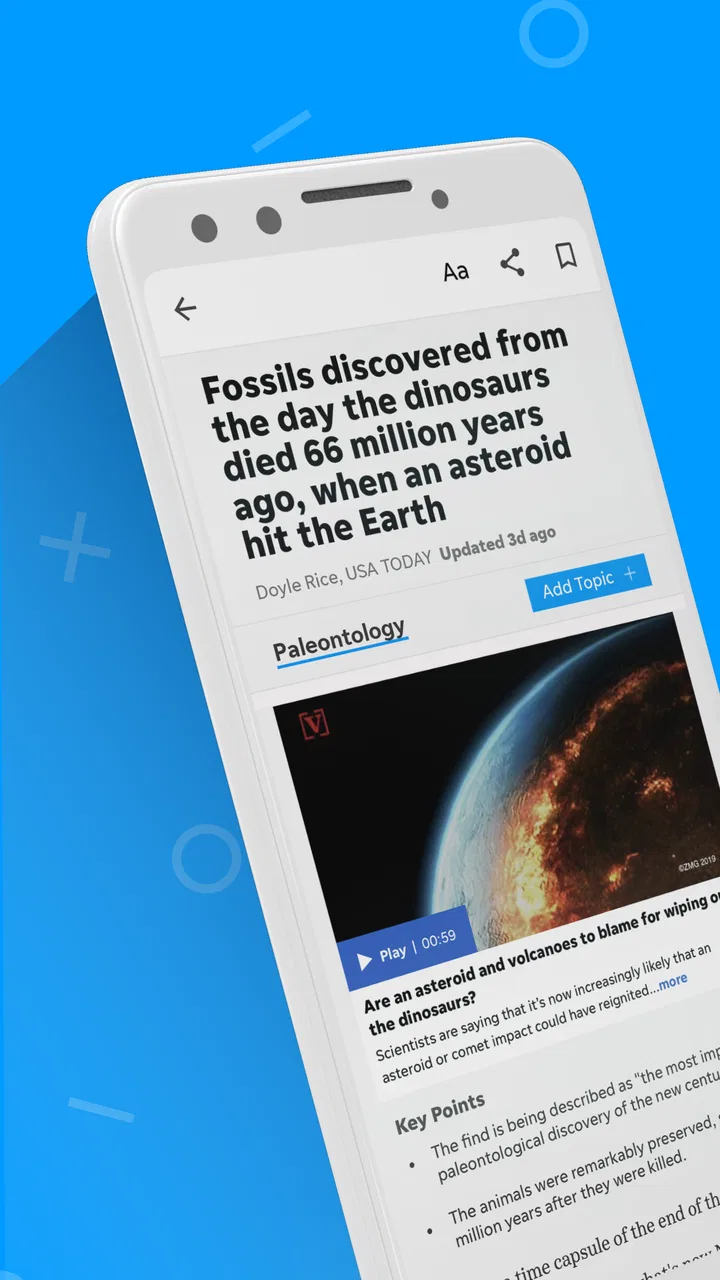
I approached Pensacola News Journal as a focused news app rather than a complete replacement for every source in my daily reading routine. It comes from USA TODAY Co. and sits in the News & Magazines category, with a clear local emphasis on Pensacola alongside broader reporting. The mix of local and national coverage, photography, and video makes it more useful than a simple headline feed, but its value depends heavily on whether Pensacola news is relevant to your everyday life.
My overall impression is that this is a practical companion for readers who want a recognizable local publication on their phone. It is free to install, aimed at users aged 10 and over, and supports Android devices running version 8.0 or later. That broad compatibility is helpful for people who keep an older phone, although the experience can naturally feel less comfortable on smaller or slower hardware when visual content is involved.
How the app feels during ordinary reading
I judge a local news app by how well it helps me make sense of nearby events, not by how many headlines it can stack on a screen. In this section, I look at the ordinary reading rhythm and the trade-off between quick checks and stories that ask for more attention. That distinction matters before considering how the app handles longer sessions and interruptions.
You May Also Like

 Pandora - Music & Podcasts
Pandora’s Music Is Easy to Start, but Harder to Recover
Pandora’s strength is its low-effort path from a seed to a station. Its weak spot is how much confidence it asks you to place in connection, setup, and quiet recovery.

 AccuWeather: Weather Radar
AccuWeather Review: A Quick, Clear Forecast for Everyday Decisions
For everyday plans, the best forecast is the one you can understand quickly. AccuWeather makes rain timing, radar, and local conditions easy to act on, with a few trade-offs.

 Hill Climb Racing
Why Hill Climb Racing Still Turns Crashes Into One More Run
A tiny car, a bumpy hill and one more upgrade: Hill Climb Racing keeps resurfacing because its simple chaos makes every near-miss feel personal.

 AliExpress - Shopping App
AliExpress Makes Global Shopping Feel Personal, but Shoppers Bear the Risk
AliExpress turns a global marketplace into a pocket-sized discovery engine. Its reach is useful, its shopping loop compelling, and its trade-offs easy to miss.

 Lords Mobile: Kingdom Wars
Lords Mobile Is a Kingdom-Building Routine, Not a Quick Match
A case-by-case verdict on the building, battles, device demands, and social commitments that make Lords Mobile rewarding for some players and exhausting for others.

 PDF Scanner app - TapScanner
TapScanner Makes Paperwork Easier to Capture, Check, and Share
TapScanner makes scanning with a phone feel less like a rescue operation and more like a dependable step in getting work done. Its capture tools are useful, though not flawless.
More From Our News Desk
View All News


Speed expectations when checking headlines
The most important performance question for a news app is simple: can I open it, find the latest local story, and start reading without unnecessary friction? In that role, Pensacola News Journal makes the most sense as an app for short, repeated visits. I would use it while having coffee, waiting for an appointment, or checking what has changed during a commute break. The local focus gives those visits a purpose instead of leaving me to sort through an endless stream of unrelated headlines.
Text-led reading should generally feel lighter than browsing a page dominated by images or video. The app’s visual reporting is one of its attractions, but it also changes what “fast” means. A headline list can be scanned quickly; a photography-heavy story or video package naturally asks for more loading time and more data. I would not judge the entire app by the first moment a rich story takes longer to appear, because the content itself is more demanding than a plain article.
One useful habit is to separate quick checks from deeper reading. I can open the app to identify the important local stories, then choose one or two pieces for a more patient read. That keeps the interface from becoming a constant stream of interruptions and makes the app feel more responsive in practice. The best performance strategy is selective reading, not trying to consume every visual item in one session.
What happens during heavier use
Longer sessions are where the app’s combination of articles, photography, and video matters most. If I am following a developing local issue, I may move from a headline to a full report, inspect images, and then watch related video. That kind of session is more resource-intensive than checking a single article, especially on a device with limited storage, memory, or battery capacity. The app is not necessarily difficult to use in that situation, but the richer the story, the less fair it is to expect the same immediacy as a text-only news reader.
Video also changes the ideal setting. On a strong connection, it can give a local story more context than a headline alone. On a weaker connection, I would prioritize written coverage and avoid repeatedly reopening media while moving between places. This is a practical trade-off rather than a flaw unique to this publication: richer reporting can be more informative, but it is rarely as economical as a lightweight feed.
For people who read news in short bursts, the app’s content balance works well. For people who spend an hour continuously browsing, the experience may feel heavier than a minimalist RSS reader or a plain-text national news app. I would also be careful about leaving several media-rich stories open at once on an older phone. Closing what I have finished and returning to the main story list is a simple way to keep a long session manageable.
Reliability and recovering after interruptions
News reading rarely happens in perfect conditions. A call may interrupt an article, a train may pass through an unreliable signal area, or the phone may pause an app that has been sitting in the background. My preferred recovery workflow is straightforward: reopen the app, return to the main stream, and locate the story again rather than assuming that every interrupted page will resume exactly where I left it.
That approach is especially sensible for a publication app because the news itself can change while I am away. A refreshed article list may be more useful than an old screen preserved from an earlier visit. If I was halfway through a long report, I would make a mental note of the headline or use the device’s normal reading habits to find it again. This is less convenient than a dedicated reading service built around persistent offline queues, but it suits readers who mainly want current local coverage.
The app’s public store presence shows an average rating of 3.2 from 201 ratings, with 88 written reviews. I read that as a reason to keep expectations measured rather than as a final verdict. News apps can be judged harshly when a user encounters a slow connection, a device-specific issue, or a subscription prompt at the wrong moment. The rating suggests that the experience is not universally smooth, so I would test it with my own phone and reading habits before making it my only news source.
Older phones and everyday device limits
Support for Android 8.0 or newer gives the app a relatively accessible starting point. That matters if I am using a phone that is no longer current but still handles ordinary apps comfortably. Compatibility, however, is not the same as identical performance across devices. A newer phone with more capable hardware should be better suited to frequent image and video browsing than an older model with limited memory.
Screen size is another practical consideration. Local articles with photographs are easier to appreciate on a larger display, while a compact phone is convenient for quick headlines but less comfortable for extended reading. If I were choosing between this app and a mobile website, I would favor the app for repeated access and the website when I only need a one-off look or want to conserve space on a very crowded device.
Storage and battery habits also deserve attention. The app is free to download, but rich news content can still consume more data and energy than a basic text feed. I would avoid treating video as background entertainment when I am on mobile data or trying to preserve battery. Readers with tight data limits may prefer to use it mainly on Wi-Fi, especially when exploring photography galleries or video-led coverage.
The cost question and who gets the most value
The free entry point makes it easy to try the publication without committing money immediately. At the same time, in-app purchases are listed from $14.99 to $69.99 per item, so anyone considering deeper access should pay close attention to the purchase screen and the terms presented there. I would not assume that installing the app means every part of the reading experience is included at no cost.
This is most appealing to Pensacola residents, former residents who still follow the area, and people with family, work, or property ties there. A local publication can provide relevance that a national aggregator cannot match. A reader who only wants general world news, technology headlines, or a broad political overview may find a national app more efficient because this publication’s strongest reason to exist is its connection to Pensacola.
It is also worth deciding whether you want one source or a layered routine. I would use this app for local awareness and pair it with a separate general news source when I need wider coverage. That arrangement avoids asking one regional publication to cover every subject equally while still giving local stories the attention they deserve.
A realistic daily workflow
Imagine starting the morning by opening the app for five minutes. I would scan the local headlines first, open the story most relevant to the day, and note whether there is useful photography or video that adds context. Later, I might return during lunch to see whether the local list has changed. In the evening, I would read one longer article rather than repeatedly refreshing the feed.
That routine highlights a subtle strength: the app can act as a local filter for a busy reader. Instead of searching the wider internet for every Pensacola-related update, I have a publication-centered place to begin. The trade-off is that I am relying on the publication’s editorial priorities, so I would still look elsewhere when I need a specialized subject, a second perspective, or coverage outside the region.
A second useful workflow is for someone who has moved away but wants to maintain a connection with home. Short visits are enough to catch up on local developments, while the visual material can make the area feel more immediate than a bare list of headlines. That use case is different from breaking-news monitoring: it is about maintaining context over time, and the app’s local identity is more valuable there than its national material.
Where it is stronger than usual alternatives
Compared with a generic news aggregator, Pensacola News Journal offers a clearer local destination. Aggregators are excellent when I want variety, but they can bury regional stories under national trends and recommendations. This app reverses that priority. I open it because I want Pensacola coverage first, not because I want an algorithm to decide what matters across the entire internet.
Compared with reading only through a browser, a dedicated app can make repeated visits feel more direct. I do not need to begin with a general search every time I want to check the publication. The downside is that an app occupies device space and may feel unnecessary for someone who visits only once a month. In that case, a browser may be the more sensible choice.
Compared with an RSS reader or text-focused news tool, this app puts more emphasis on presentation. Spectacular photography and video can make a story easier to understand and more engaging, but they also create the heavier moments described earlier. I would pick an RSS reader for speed, compactness, and control across many publications; I would pick this app when the local source and its visual storytelling matter more than minimal resource use.
What I would check before settling in
Before making it part of my daily routine, I would confirm that my phone meets the Android requirement and that I have enough room for another media-rich app. I would then try it on both a strong connection and my usual mobile connection. That quick comparison tells me whether the app fits my real environment rather than an ideal one.
I would also decide in advance how I feel about optional spending. Since individual in-app purchases can range from $14.99 to $69.99, I would read each offer carefully instead of tapping through automatically. This is particularly important for households where several people share a device or payment method. The free installation is a low-risk way to evaluate the app, but it should not be confused with unlimited access to every possible part of the service.
Finally, I would compare the app with my current local-news habit for several days. If it saves me time finding Pensacola stories, it has earned a place on my phone. If I mostly want national headlines or instant text-only loading, another tool will probably suit me better. The right choice depends less on the app’s broad category than on whether its local focus matches my actual reading needs.
My performance verdict
Pensacola News Journal is best understood as a local publication app with a richer presentation layer, not as the lightest possible way to read headlines. Its speed should be most comfortable during short article-focused visits, while photography and video make longer sessions more demanding. On a modern device and a reliable connection, that trade-off can be worthwhile. On older hardware, limited data, or a weak signal, I would use it more selectively and lean toward written stories.
The app’s long availability, beginning in 2012, and its current version, 8.10.3, show that it has an established place on the platform. Its audience size is over 10 thousand installs, which gives it a meaningful local footprint without making it feel like a universal news service. I see that as consistent with its purpose: it is for readers who specifically value Pensacola coverage, not for everyone searching for a single all-purpose news application.
My recommendation is therefore conditional but positive. If local Pensacola reporting is important to you, I would install it and judge the experience on your own phone, especially during the kinds of short visits you expect to make. If you need a very fast, low-data, wide-ranging reader, I would choose a simpler alternative and use this publication only when local context matters. For the right reader, its strongest advantage is relevance; its main compromise is the extra weight that comes with visual, media-rich coverage.
FAQs for Pensacola News Journal
01What is the Pensacola News Journal app used for?
The Pensacola News Journal app provides access to local and regional news from Pensacola, Escambia County, Santa Rosa County, and surrounding areas. It typically includes breaking news, politics, crime reports, weather, sports, entertainment, opinion articles, and community updates. The app is designed for readers who want convenient access to coverage from the newspaper on a mobile device.
02Is the Pensacola News Journal app free to download and use?
Downloading the Pensacola News Journal app is generally free, allowing users to install it and browse available content without an upfront purchase. However, access to the complete article library may require a digital subscription, login, or an existing newspaper subscription. Some stories and features may remain available without payment, while premium content can be restricted.
03Does the app require a subscription to read all articles?
A subscription may be necessary to read all Pensacola News Journal articles, especially premium stories, investigative reporting, exclusive local coverage, and archived content. The exact access rules can change over time and may depend on your account or subscription plan. Before subscribing, check the in-app terms, pricing, trial conditions, and renewal information.
04Can I receive breaking news and local weather notifications?
The Pensacola News Journal app may support push notifications for breaking stories, important local developments, severe weather, sports updates, and other selected topics. Notifications usually require permission from your device settings, and the available categories can vary by app version. If alerts become excessive, you can manage or disable them through the app or your phone settings.
05Does the Pensacola News Journal app work offline?
The app primarily depends on an internet connection to load current articles, images, videos, advertisements, and live updates. Some versions or subscription features may allow limited content to remain available after it has been loaded, but users should not assume that every article works offline. For reliable access, use Wi-Fi or mobile data and keep the app updated.
Pros
- Covers local Pensacola events
- schools
- politics
- and community updates.
- Offers timely reporting focused on issues affecting Escambia and Santa Rosa counties.
- Digital access makes articles available on phones and tablets while traveling.
- Includes opinion pieces and local perspectives that encourage community discussion.
- Useful for staying informed about breaking news in the Florida Panhandle.
Cons
- Some articles may require a subscription or have limited free access.
- Advertising and promotional messages can make the app feel cluttered.
- Coverage may be less useful for readers outside the Pensacola area.
- Breaking-news updates can vary in depth depending on the developing story.
- Some users may prefer the website for easier browsing of long articles.

Pensacola News Journal
Gallery